Portal Survivor
- 4.7
- Rating
- 50.00K
- Installs
- Free
- Price

 Analysis by App-foxy
Portal Survivor is the kind of action game I reach for when I want a short, energetic session rather than a slow campaign. It puts the focus on surviving pressure from large enemy groups, making quick decisions, and improving my run as the danger keeps building. The basic appeal is easy to understand, but the real question is whether that loop gives enough variety and control to stay interesting after the first few attempts.
After spending time with it, I see a compact roguelite action shooter built around repeated runs. You enter, fight through escalating threats, choose how to develop your character during the attempt, and try to last longer or make better decisions than before. That structure makes each session feel self-contained, which is useful when I only have a few minutes, while still offering a reason to return when a run ends badly.
How Portal Survivor feels to play
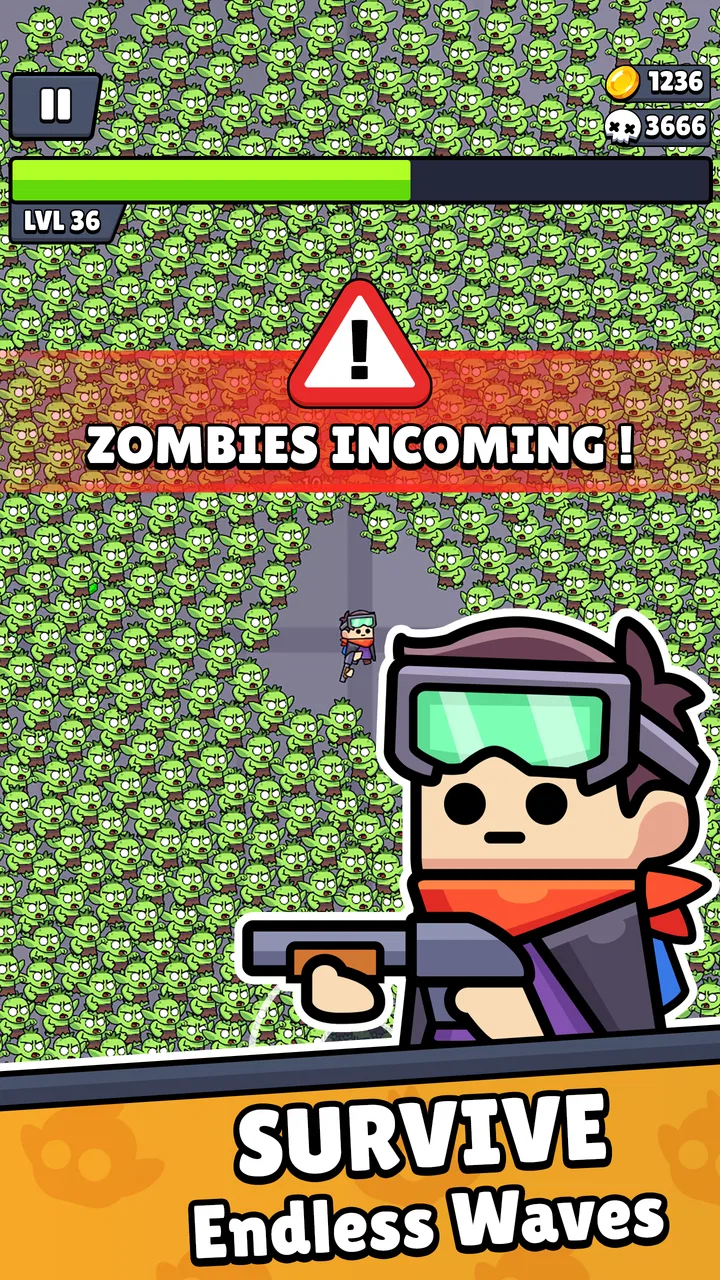
The first thing I noticed is how quickly the game gets to its main idea. There is no need to learn a complicated story before the action starts. The screen becomes a problem-solving space: enemies approach from several directions, attacks need to be managed under pressure, and every moment spent moving carelessly can make the next wave harder to handle.
You May Also Like

 AccuWeather: Weather Radar
AccuWeather Review: A Quick, Clear Forecast for Everyday Decisions
For everyday plans, the best forecast is the one you can understand quickly. AccuWeather makes rain timing, radar, and local conditions easy to act on, with a few trade-offs.

 Hill Climb Racing
Why Hill Climb Racing Still Turns Crashes Into One More Run
A tiny car, a bumpy hill and one more upgrade: Hill Climb Racing keeps resurfacing because its simple chaos makes every near-miss feel personal.

 AliExpress - Shopping App
AliExpress Makes Global Shopping Feel Personal, but Shoppers Bear the Risk
AliExpress turns a global marketplace into a pocket-sized discovery engine. Its reach is useful, its shopping loop compelling, and its trade-offs easy to miss.

 Lords Mobile: Kingdom Wars
Lords Mobile Is a Kingdom-Building Routine, Not a Quick Match
A case-by-case verdict on the building, battles, device demands, and social commitments that make Lords Mobile rewarding for some players and exhausting for others.

 PDF Scanner app - TapScanner
TapScanner Makes Paperwork Easier to Capture, Check, and Share
TapScanner makes scanning with a phone feel less like a rescue operation and more like a dependable step in getting work done. Its capture tools are useful, though not flawless.

 Block Blast!
 Shows How Much a Puzzle Game Can Leave Out
A quiet grid game shows why puzzle players increasingly value instant clarity, repeatable skill and low-pressure play—and where the genre still needs to catch up.
More From Our News Desk
View All News


That makes movement more important than simply pointing at the nearest target. I found myself thinking about where the safest open space would be a few seconds later, not just where the enemy was at that instant. A useful habit is to avoid hugging the edge of the play area unless there is a clear reason to do so. Staying near a route with more than one escape direction gives me a better chance when the crowd closes in.
The roguelite format also changes how I judge a failed run. Losing is frustrating, but it is not necessarily wasted time. A poor attempt can reveal that I chose damage when I really needed survival, or that I waited too long before moving away from a dangerous cluster. That learning process is where much of the appeal lies. The game works best when I treat each run as a small experiment instead of expecting every attempt to become a victory.
The strongest part of the design is the tension between immediate safety and long-term improvement. A choice that helps me clear enemies quickly may leave me exposed later, while a safer option can make the current stage feel slower. That trade-off gives the action more texture than a simple score chase, even though the controls and objective are easy to grasp.
Small decisions matter more than frantic movement
When the screen becomes crowded, panic is usually the real enemy. I get better results by choosing a direction first and moving with purpose, rather than changing course every time a new enemy appears. This is especially useful when several threats are approaching from different sides. A steady route can create distance and keep targets grouped, while random movement often leads straight into a second group.
I also recommend watching the space around the character instead of focusing only on the largest enemy. The most dangerous situation is often not the strongest opponent by itself, but the moment when a small gap disappears and there is no clean route left. Keeping a little room available is a practical form of defense, and it makes offensive upgrades more useful because I can spend more time attacking instead of constantly recovering from bad positioning.
Another worthwhile approach is to decide early what kind of run I am building. If I select improvements without a direction, the character can end up with several moderately useful tools but no clear strength. A focused run is easier to understand: either I am trying to clear groups quickly, stay mobile, or survive mistakes. The exact best choice will depend on what appears during the run, but having a plan makes those choices less random.
What the free entry point means for value
Portal Survivor is free to download, which makes trying it straightforward. I do not have to commit money before discovering whether this particular style of action suits me. That matters because roguelite games can feel exciting to one player and repetitive to another. Free access lowers the risk of finding out where I stand.
The game includes optional in-app purchases ranging from $0.99 to $99.99 per item. I would therefore approach spending carefully. The free starting point is enough to judge the core loop, but anyone who becomes invested should set a personal limit before buying anything. The wide gap between the smallest and largest listed purchase makes it especially important to treat optional spending as a choice, not as part of the basic cost of entry.
For me, the value question is not whether the game is free in a technical sense. It is whether the free experience gives enough room to decide if repeated survival runs are enjoyable. It does. I can test the pace, the pressure, and the way the game handles failure without treating the first session as a financial commitment. I would only consider a purchase after I had already confirmed that I wanted more time with this specific loop.
That distinction is useful for families too. The content rating is Everyone, but an age label does not replace supervision around purchases. If the game is installed on a shared device, I would make sure the person playing understands that optional items can cost real money. The safest approach is to enjoy the free portion first and make any later purchase deliberately.
Where the design delivers real value
The biggest practical strength is flexibility. A run can fit into a spare moment, yet the decision-making is active enough that I do not feel as though I am merely waiting for a timer. This makes it a good companion for a commute, a break between tasks, or an evening when I want action without starting a large console-style adventure.
It also has value as a game of gradual self-correction. I can notice patterns in my own play: entering narrow spaces too early, choosing an attractive upgrade without considering the next threat, or failing to reserve an escape route. Those lessons carry into the next attempt. The game does not need a long story to provide a sense of progress because the player’s understanding becomes part of the progression.
Its straightforward premise is another advantage. I do not need to remember a complicated plot or manage a large collection of characters before I can enjoy a session. That makes it easier to return after a few days away. I can pick it up, remember the basic priorities, and concentrate on surviving rather than relearning a large system.
At the same time, this simplicity places a limit on its appeal. Players who need a strong narrative, a deep social mode, or a carefully structured campaign may find the experience too focused. Portal Survivor earns attention through repeated action and decision-making, not through a broad world or a long sequence of story scenes.
Useful habits for better runs
My first practical tip is to treat the opening moments as preparation rather than a race for maximum damage. Early on, I try to understand how quickly the threats can close distance and which areas of the screen are likely to become unsafe. That information helps me make better choices later, when there is less room to recover.
Second, I avoid spending every advantage immediately. If I have a way to clear a group or create breathing room, I prefer to keep it available until the crowd actually threatens my route. Using a powerful response on a manageable group can leave me helpless when several directions become blocked. This is a small change in timing, but it makes difficult sections feel more controllable.
Third, I separate a run’s goal from its result. Sometimes I play to survive as long as possible; other times I deliberately test a different style of build or movement pattern. That approach prevents every failure from feeling like a complete loss. It also gives me a clearer idea of which decisions are helping, because I am not changing everything at once after every defeat.
A fourth tip is to play in a setting where interruptions are unlikely when trying to improve. The controls may be easy to understand, but the action punishes divided attention. A quick casual run is fine when I only want a distraction; a serious attempt benefits from a few uninterrupted minutes. That difference explains why the same game can feel relaxed one day and surprisingly demanding the next.
Limitations I would consider before installing
The repeated-run structure will not suit everyone. If I want a fixed adventure with reliable chapters and a clear ending, this is not the better choice. The appeal depends on returning to a familiar foundation and trying to handle it more effectively. Players who dislike repetition, even when each attempt involves different decisions, may lose interest quickly.
The action can also become mentally tiring. Watching enemy movement, preserving space, and making upgrade decisions at the same time requires concentration. I enjoy that pressure in short sessions, but I would not describe it as a passive game for listening to something else in the background. If I am distracted, my mistakes usually come from positioning rather than from a lack of knowledge.
Optional purchases are another point of friction. Free access is a clear benefit, but the presence of items priced as high as $99.99 means I would not hand the device to a child without purchase controls or a clear household rule. The game can be evaluated without spending, and that is how I recommend starting, but the purchase range deserves attention from anyone managing a shared account.
The game is also aimed at a particular kind of satisfaction. It rewards repetition, quick reactions, and learning from failed attempts. It is less suitable for someone seeking a calm puzzle, a social hangout, or a story-led experience. Those are not flaws in isolation; they simply define the situations in which another category would provide better value.
How it compares with familiar action alternatives
Compared with a traditional level-based action game, Portal Survivor is more flexible but less structured. I can begin a run without committing to a long campaign, and failure sends me back into the central loop rather than leaving me wondering which story objective to follow. The trade-off is that I do not get the same sense of visiting new places or progressing through a carefully ordered adventure.
Compared with a purely casual arcade game, it asks more from me. The enemy pressure is only one part of the challenge; choosing how to shape a run and deciding when to move are equally important. That gives it more staying power than a game built only around quick reactions, although it also means a player looking for instant, consequence-free fun may prefer something lighter.
Compared with a premium game that charges once at the beginning, the free entry is more welcoming for experimentation, but the optional purchase model requires more personal discipline. A single paid download can feel simpler for someone who wants a complete package with no purchase decisions during play. Portal Survivor is better for the player who values trying first and deciding later.
That comparison also clarifies who should skip it. I would look elsewhere if my priority were a substantial narrative, a one-time purchase with a clearly defined package, or a relaxed game that does not demand attention. I would keep Portal Survivor in mind if I wanted a repeatable action loop that can be learned gradually and played in short bursts.
Who is most likely to enjoy it
I think it is a strong match for players who like roguelite games but do not want a large, complicated introduction. It is also a sensible option for someone who enjoys action games on a phone and wants each attempt to feel like a small challenge rather than a routine level. The free download makes it easy to test that fit personally.
It can work well for a busy player. Imagine having a short break after finishing a task: one run gives you a focused activity without requiring you to remember a long quest chain. If the break ends, the session has still served its purpose. Later, you can return with a clearer goal, such as practicing movement or trying a different upgrade direction.
I would be more cautious recommending it to a player who becomes frustrated by failure or wants immediate mastery. The game’s satisfaction comes from noticing improvement across attempts, not from winning every time. Someone who prefers predictable progress may find the repeated setbacks less rewarding than a conventional action campaign.
Device compatibility is reasonably broad, with support beginning at Android 6.0. The current version is 3.7.0, so I would still keep the game updated through the normal store process when possible. The developer is ESC Games Yazılım A.Ş., and the game has reached over 50,000 installs with a 4.7 average from around 530 ratings. Those figures suggest a positive response among its current audience, although they should be treated as context rather than a guarantee that its particular style will suit me or you.
My verdict on spending time or money
I recommend trying Portal Survivor if you want a free action game built around repeated survival attempts and quick decisions. Its best qualities are the immediate start, the useful tension between movement and build choices, and the way a failed run can teach something concrete. I especially like it for short sessions where I want more involvement than a simple time-filler can provide.
I would not recommend paying anything immediately. The free access is the important value proposition because it lets you test the entire feel of the loop before deciding whether optional purchases are worthwhile to you. Since individual in-app items can cost from $0.99 up to $99.99, any spending should follow a clear personal limit and a genuine desire for more convenience or content, rather than pressure created by a difficult run.
My final judgment is a cautious recommendation: try it free, learn whether repeated survival action is your kind of fun, and keep purchases optional. It is not the right replacement for a story-heavy action game or a simple one-time premium experience. But for a player who enjoys improving through short, intense runs, Portal Survivor offers a focused way to turn a few spare minutes into a meaningful challenge.
FAQs for Portal Survivor
01What is Portal Survivor and how does the gameplay work?
Portal Survivor is an action-survival game centered on fighting continuous waves of enemies while using portals to move between dangerous areas and discover new challenges. During each run, you typically control a survivor, collect experience or resources, improve abilities, and try to remain alive as long as possible. The exact objectives can vary by stage, but the main focus is fast combat, positioning, upgrades, and managing increasingly difficult enemy attacks.
02Is Portal Survivor free to download and play?
Portal Survivor can generally be downloaded without an upfront purchase, allowing players to try the core gameplay at no initial cost. However, the free version may include advertisements, optional in-app purchases, or both. These purchases can provide cosmetic items, extra resources, progression assistance, or other conveniences, depending on the version available in your region. Check the store listing before downloading for current pricing and purchase details.
03Does Portal Survivor require an internet connection?
Whether Portal Survivor works fully offline may depend on the feature you are using and the game version installed on your device. Basic gameplay may be available without a constant connection, but advertisements, cloud saves, account features, updates, leaderboards, or purchases can require internet access. If offline play is important to you, test the game in airplane mode after installation and review its current store description.
04Is Portal Survivor suitable for children and casual players?
Portal Survivor is likely to appeal to players who enjoy quick action, repeated runs, enemy waves, and gradual character improvement. Its controls may be easy to understand, but the difficulty can increase as stages progress, making some encounters challenging for younger or less experienced players. Parents should also review the app’s age rating, advertising, chat or social features, and in-app purchase settings before allowing children to play.
05What devices are needed to run Portal Survivor smoothly?
Portal Survivor should run on many modern Android and iOS devices, but performance can vary according to the phone or tablet’s processor, available memory, operating-system version, and storage space. Later stages with numerous enemies and visual effects may require more resources than the opening levels. Before downloading, check the official store requirements, keep sufficient free storage available, and close background apps if you experience lag or overheating.
Pros
- Simple controls make it easy to start playing immediately.
- Short runs fit well into quick gaming sessions.
- Progression rewards encourage repeated attempts and experimentation.
- Runs remain varied thanks to changing enemy encounters.
- Offline play is convenient when traveling or without a connection.
Cons
- Difficulty can rise sharply after the early stages.
- Repeated runs may feel familiar after extended play.
- Limited character variety may reduce long-term appeal.
- Some upgrades take time to unlock or improve.
- Small-screen action can become visually crowded during battles.

Portal Survivor
Gallery